
Cyber Security for Medical Practices — Healthcare Cybersecurity Sydney
- Medical practices are high-value targets. PIP knows why.
- Healthcare cybersecurity built for clinical environments.
- Essential Eight. Ransomware protection. Privacy compliance.
Medical practices hold some of the most sensitive data in Australia. PIP delivers specialist cyber security for Sydney healthcare organisations — from ASD Essential Eight alignment to ransomware protection and privacy compliance, securing the systems that patients and healthcare providers depend on.
Why Medical Practices Are High-Value Targets
Healthcare organisations hold highly sensitive patient information — clinical histories, Medicare numbers, prescription records and health records that command premium prices on criminal markets. This is not hypothetical. The healthcare sector is one of the most targeted by cyber criminals in Australia, and in the first half of recent reporting periods, health data consistently appears among the top categories of mandatory breach notifications under the Notifiable Data Breaches (NDB) scheme. Cyber threats against healthcare providers and healthcare organisations are increasing because the data is valuable and the organisations holding it often lack dedicated security resources. For example, a single GP practice may store thousands of patient records containing sensitive information — enough to make it a worthwhile prize for cyber criminals operating at scale across the sector.
A cyber attack on a medical practice is not just a data problem — it is a patient care problem. Ransomware that locks a practice out of its clinical systems stops patients from being seen. Patient outcomes suffer when critical data is inaccessible, and patients whose records are compromised face ongoing identity threats. Healthcare institutions face reputational damage that goes beyond financial cost, because patient trust is a core clinical asset. Healthcare providers in general practice often operate without a dedicated security team, which cyber criminals know and exploit — the threats facing these organisations are real and well documented.
The most common attack vectors in general practice are familiar: phishing, weak passwords on remote access systems, unpatched software creating exploitable vulnerabilities, and human error by employees not trained to spot threats. Hackers target healthcare because the combination of sensitive data, clinical urgency and limited cyber security resources makes the healthcare sector particularly vulnerable. Cyber attacks often begin with something as simple as a staff member clicking a link in a phishing email or reusing passwords across a website and a clinical system. Securing a healthcare organisation starts with understanding these threats and responding with the right cybersecurity strategies — not generic IT security.
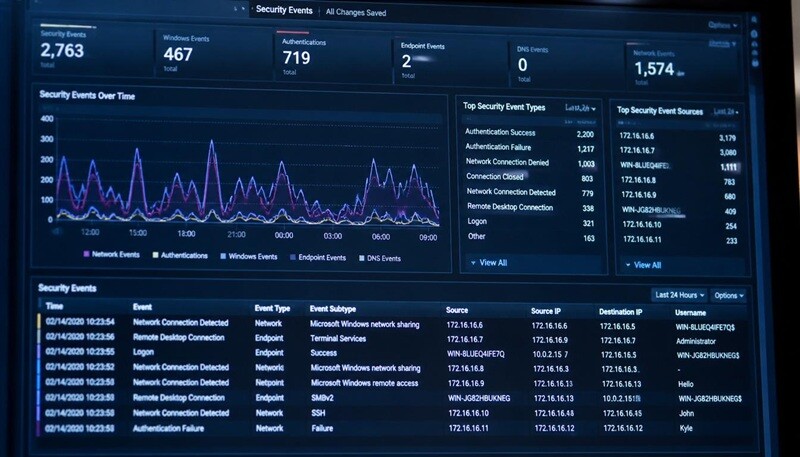
Active threat monitoring — the work behind healthcare cyber security.
What Your Practice Faces
Practice managers do not need a textbook on cybersecurity — they need to know which potential threats sit in their environment and how to respond. Here is what affects organisations in the healthcare sector in Australia right now.
Ransomware. Encrypts clinical records and demands payment to restore access. Ransomware is one of the fastest-growing cyber threats to healthcare globally, and a single attack can halt a practice for days. Securing backups and maintaining patch cycles are critical defences.
Phishing and malicious attacks. Deceptive emails designed to capture passwords or deliver malware are the most common entry point for cyber threats in healthcare. Staff should be trained to report anything unusual immediately. Human error remains the primary vector — hackers rely on it, and a single compromised account can expose an entire network.
Unauthorised access. Weak passwords and improperly secured systems create exposure that cyber criminals exploit. Unauthorised access to clinical systems through network vulnerabilities, shared passwords or unsecured devices puts patients and sensitive information at risk. Healthcare organisations must secure every device and access point — workstations, remote connections and the website portal — with strong passwords, multi-factor authentication (MFA) and network controls.
Unpatched software. Clinical software and operating systems that are not kept up to date contain known vulnerabilities that cyber criminals exploit. Application patching is one of the ASD Eight mitigation strategies — it exists because unpatched systems are among the most common threats to healthcare security. Securing software against known exploits is a baseline requirement, not an optional extra.
A cybersecurity incident in healthcare is not just an IT problem. It triggers mandatory breach notification obligations, can affect patient care, and the affected healthcare organisation is responsible for reporting to the relevant government authorities. In general practice, where resources are limited, the risk to patients is real and cyber resilience starts with recognising these threats clearly.
Healthcare Cybersecurity from PIP
PIP’s cyber security services for healthcare are structured around three disciplines — each addressing the specific threats that put patients and healthcare organisations at risk. Each has a dedicated page with the full detail, and each reflects PIP’s role as a specialist healthcare cybersecurity partner in Australia.
ASD Essential Eight
The Australian Signals Directorate (ASD) recommends eight cybersecurity mitigation strategies for Australian organisations. PIP assesses healthcare organisations in the sector against all eight and implements controls to reach the target maturity level — securing healthcare providers with a proven government framework.
The Eight for healthcare →Ransomware Protection
Ransomware targeting healthcare organisations in Australia has increased significantly, and the threats are becoming more sophisticated. PIP implements layered protection — backup strategies, patch management, access controls and endpoint security — to protect patient information and ensure healthcare providers can recover quickly when attacked, with patients back in front of their doctors as soon as possible.
Ransomware protection for healthcare →Healthcare Privacy Compliance
Healthcare organisations have mandatory obligations under the Privacy Act 1988 and the Notifiable Data Breaches (NDB) scheme. PIP helps organisations understand what is required, implement controls for patient data and sensitive information, and respond appropriately if a data breach occurs.
Privacy compliance for healthcare →Cyber Security for Healthcare
PIP is a specialist partner for healthcare cyber security in Australia — not a generic IT services provider. A comprehensive understanding of how clinical software, network infrastructure and compliance obligations fit together is what separates healthcare cybersecurity from general security services. PIP hosts clinical systems on its own infrastructure in an ISO/IEC 27001 certified Sydney datacentre and works with healthcare providers to defend patients, secure clinical systems and build cyber resilience against the threats facing the healthcare sector.
ASD Eight assessment
Current maturity level, gaps, remediation roadmap — aligned to the Australian Cyber Security Centre (ACSC) recommendations for securing organisations against cyber threats and reaching the required level.
Managed security
Proactive monitoring, patch cycle management, security alerting, network protection and website security — ongoing cybersecurity services securing patients and healthcare providers against current threats.
Employee training
Helping employees identify fraudulent emails, use strong passwords, avoid clicking suspicious links and report incidents. For example, training staff to recognise a phishing email or a fake website is a vital part of cyber resilience for any healthcare organisation. Regular training and awareness sessions reduce human error across the organisation.
Privacy & compliance support
Privacy Act obligations, breach notification responsibility, patient data handling — helping healthcare providers ensure compliance with government requirements and safeguard patients and sensitive data.
Incident response
Handling cybersecurity incidents in clinical environments with minimal disruption to patient care — because patients need to keep being seen and threats need to be contained, not queued.
Network & devices
Securing the network, workstations and devices that healthcare providers use to access clinical systems — the attack surface that hackers look for first. Every device that touches patient data is part of the security perimeter.

Calm, competent security management — built for healthcare.
We’ve seen GP practices recover from ransomware incidents. The practices that get back online fastest are the ones that had good backups and had someone who understood how the clinical software fits together — not just how to restore a server. Most generic IT companies can restore from backup. Very few know which backup, in what order, to bring a Best Practice or Medical Director environment back online correctly.
— PIP Medical ITSpecialist Cyber Security for Sydney Medical Practices. Healthcare-Specific. Compliance-Ready.
ASD assessment, ransomware protection and privacy compliance — cyber security services for healthcare providers, GP clinics and patients across Australia.
Healthcare cybersecurity partner — securing Sydney healthcare organisations