
Medical Practice Phone Systems — VoIP for GP Clinics
- A phone system that handles the Monday morning rush.
- VoIP for medical practices. Built for clinical call volumes.
- After-hours routing. Call queuing. Number porting. Done right.
PIP provides cloud-based VoIP phone systems for Sydney GP clinics, specialist practices and healthcare providers — designed for high call volumes, after-hours routing, and medical practice workflows. VoIP solutions for medical clinic environments where every missed call is a missed appointment.
Why Medical Practices Need a Different Phone System
A GP clinic is not a normal small business when it comes to phone traffic. A busy single-GP practice in Sydney can take 80 inbound calls before 9:30am on a Monday — the appointment rush, prescription renewals, pathology results, specialist referral calls, and patients checking opening hours. A generic small business VoIP product is not built for that pattern. A medical practice phone system needs to handle the volume spike without dropping calls, route after-hours callers correctly, and integrate with the way a medical reception desk actually operates.
After-hours routing is not optional in a medical practice. Patients calling outside clinic hours need to reach an after-hours service, nurse triage line, or on-call GP — and the routing has to be configured correctly so no call goes unanswered. On-hold messaging in a medical practice is not background music; it can direct callers to the right queue, promote flu vaccination clinics, or remind patients that telehealth consultations are available. Call queuing matters because a receptionist handling a complex booking cannot also answer the next six calls — the phone system has to manage the queue without losing callers.
Compliance is also different. If the practice records calls, the recording must comply with Privacy Act obligations. And modern VoIP systems can display patient caller ID when the calling number matches a record in compatible practice management software — saving reception time on every call. These are not features a generic phone system provides out of the box. PIP configures VoIP phone systems specifically for GP clinic and specialist practice workflows.
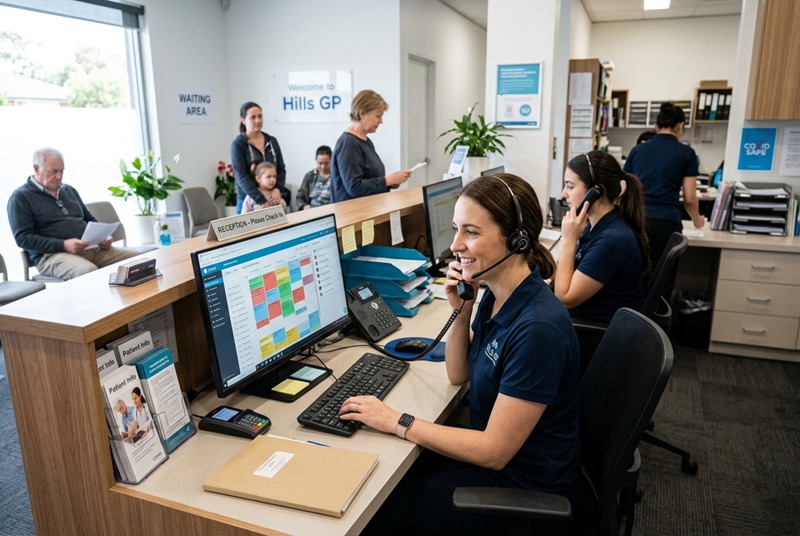
GP clinic reception — high call volumes, handled right.
VoIP Phone System Features for Medical Practices
PIP provides cloud-based VoIP (Voice over Internet Protocol) phone systems configured for the specific needs of GP clinics, specialist practices and allied health providers. No on-premises PBX hardware required.
Auto-attendant & IVR
“Press 1 for appointments, Press 2 for prescriptions” — customised Interactive Voice Response for the practice’s workflow.
After-hours routing
Automatic after-hours messages and call diversions to the after-hours service, nurse triage or on-call GP. Configured correctly the first time.
On-hold messaging
Branded, professionally recorded on-hold messages for waiting callers — promoting services, directing callers and reducing perceived wait time.
Call queuing & hunt groups
Manage high inbound call volumes without missed calls. Calls ring multiple reception phones simultaneously or in sequence — no caller hears a busy signal.
Voicemail-to-email
Missed calls and voicemails delivered to the practice inbox. Nothing lost — every message followed up.
Mobile softphone
Receptionists and GPs can use the phone system from a mobile device or laptop — useful for multi-site practices and on-call coverage.
Call recording
Where required, call recording can be configured. PIP advises on Privacy Act compliance for any recording configuration.
Number porting
PIP ports the practice’s existing phone number to the new VoIP system. No number change — patients and referrers call the same number.
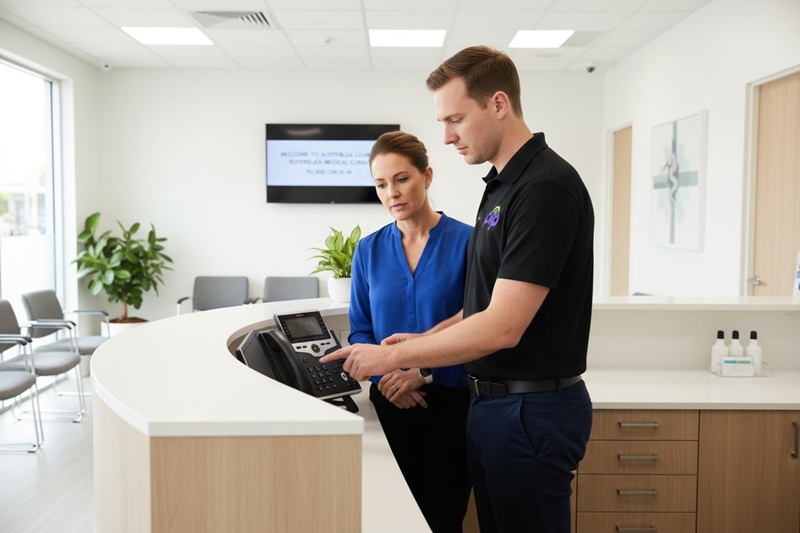
VoIP for medical practices — configured by PIP.
Every GP practice we’ve set up VoIP for has had the same conversation about the Monday morning call volume. The practice manager thinks their call volume is normal. It isn’t. A busy single-GP practice in Sydney can get 80 inbound calls before 9:30am on a Monday. The phone system has to be built for that, not adapted from a generic business VoIP product.
— PIP Medical ITMedical Practice Phone Systems — Questions
Do I need to change my phone number when switching to VoIP?
No. PIP ports your existing phone number to the new VoIP system. Patients and referrers keep calling the same number — no disruption, no reprinting of business cards or letterheads.
Can VoIP handle a busy GP reception?
Yes. Modern cloud-based VoIP handles multiple simultaneous incoming calls with call queuing, hunt groups, and overflow routing. PIP configures the system to match the practice’s actual call volume patterns — including the Monday morning spike that catches every new practice off guard.
Is VoIP reliable enough for a medical practice?
Yes, provided the practice has a reliable internet connection. PIP assesses internet connectivity as part of the VoIP setup and can recommend upgrades if the connection cannot support the required call volume. The phone system is only as reliable as the internet beneath it — PIP makes sure both are right.
What happens to calls when the internet goes down?
PIP configures call failover — if the primary internet connection fails, calls automatically redirect to a configured mobile number or after-hours service. The practice does not go silent. Patients still reach someone.
Can the phone system record calls?
Yes. Call recording can be configured where required. Any call recording must comply with Privacy Act obligations — PIP advises on compliance requirements during setup so the practice is covered from day one.
VoIP Phone Systems Designed for Medical Practice. Not Adapted from Generic Business Products.
Medical practice phone systems for Sydney GP clinics and specialist practices. After-hours routing, call queuing, number porting — configured by PIP.
Medical VoIP • GP clinic phone systems • after-hours routing