
Cyber Security Audit for Australian Businesses
PIP’s cyber security audit reviews your IT environment across access controls, network configurations, backup integrity and security gaps — producing a prioritised findings report and remediation roadmap that identifies hidden vulnerabilities before an attacker does.
What is a cyber security audit?
A cyber security audit is a structured, independent review of an organisation’s IT environment — examining security controls, access management, network configuration, backup integrity and alignment with information security policies and compliance frameworks. The output is a documented findings report: what was reviewed, what security risks were found, and a prioritised list of remediation actions ranked by risk. A security audit is how organisations proactively identify vulnerabilities, assess their security posture and reduce cyber risk before a data breach forces the conversation. A security audit identifies vulnerabilities across your digital assets, intellectual property and business-critical data — strengthening your security posture and giving the organisation a defensible position if a data breach or cyber security incident does occur.
A cyber security audit is not the same as a penetration test. A security audit reviews what controls are in place and whether they are operating effectively; a penetration test simulates an active cyber attack to see whether those controls hold under pressure. The two are complementary — PIP offers both — but a security audit is the logical first step.
A cyber security audit is also distinct from a compliance report, although cybersecurity audit findings frequently inform compliance obligations under ISO 27001, the Privacy Act and the ASD Essential Eight.
PIP conducts cyber security audits as standalone engagements and as part of ongoing managed IT services. Clients on PIP’s managed service have access to periodic security audit reviews as part of the relationship — providing proactive protection against the evolving threats and security risks that accumulate as environments change, staff turn over and new systems are deployed.
A genuine security audit examines three dimensions
A superficial cybersecurity audit checks whether security policies exist. A proper cyber security audit checks whether those policies are actually reflected in the configuration — because in PIP’s experience, the gap between the security policy and the live configuration is where most hidden vulnerabilities live.
People
Access rights, privileged account management, employee practices, awareness of security policies, and whether user accounts reflect current roles — or carry dormant privileges from years of changes.
Processes
Patch management cycles, backup procedures, incident response planning, password and data handling policies, and the cybersecurity processes that are supposed to keep the environment secure between audits.
Technology
Network configurations, firewall rules, endpoint security, encryption status, software currency, remote access controls, outdated software and the automated tools that monitor for security events and potential threats.
What PIP’s security audit covers
PIP’s professional auditors follow a structured methodology. Every cybersecurity audit covers these areas — identifying critical assets, evaluating the required security controls and using the audit to identify vulnerabilities, document the associated risks and prioritise remediation.
Access control review
Who has access to what, and at what privilege level. The cybersecurity audit identifies over-privileged user accounts, dormant accounts and shared credentials that create information risk.
Network configuration assessment
Firewall rules, network security segmentation, remote access configuration and wireless security. Network configurations are the perimeter — and the perimeter is where external audits focus first.
Patch status review
Current patch levels for operating systems and applications, identifying unpatched systems and outdated software that expose the organisation to known cyber threats. Left unpatched, these are the entry points most cyber threats exploit.
Backup and recovery validation
Is backup configured correctly? Is it tested? Is the offsite copy up to date? Can you actually restore from it? These are the questions the cybersecurity audit answers — because untested backups are not backups.
Email security configuration
SPF, DKIM and DMARC records; email gateway filtering; susceptibility to phishing and business email compromise — the delivery channel behind the majority of cyber security incidents.
Endpoint security review
Antivirus and endpoint protection status, coverage across all devices, real-time monitoring and whether security measures are actually active on every endpoint — not just the ones you remember.
Remote access controls
VPN configuration, MFA enforcement for remote access, and remote desktop security settings — every remote access path is an information security surface that the cybersecurity audit evaluates.
Security policy review
Are security policies documented, current and communicated? Are they reflected in the actual IT configuration? The audit reviews the policy against the reality — and documents where security risks sit in the gap.
Sensitive data handling
Where is sensitive data and sensitive information stored? Who has access? Is it encrypted in transit and at rest? Data protection and data handling practices are core to every information security audit PIP conducts.
Essential Eight maturity baseline
Where does the organisation sit against the ASD Essential Eight? PIP’s cybersecurity audit includes a maturity baseline across the eight controls — a requirement for cyber insurance, government systems and procurement. See PIP’s Essential Eight page for the full framework.

Types of cyber security audit
PIP conducts internal audits and external audits depending on what your organisation needs. Here are the four most common formats — each designed to identify vulnerabilities, strengthen your security posture and protect your organisation’s digital assets and intellectual property — each produces structured risk assessment documentation, risk assessment audits and a clear remediation roadmap.
Full Security Audit
A complete cybersecurity audit across all dimensions: access controls, network security, endpoint security, backup integrity, email security, data protection and Essential Eight maturity. Produces a full findings report with remediation roadmap.
Recommended for organisations with no prior security audit on record — and the foundation for establishing internal baselines.
Essential Eight Assessment
A focused cybersecurity audit against the ASD Essential Eight maturity model. Establishes your current maturity level across all 8 controls and produces a prioritised gap analysis for reaching your target maturity level — the format most commonly requested for cyber insurance and government procurement. See PIP’s Essential Eight page.
Network Security Review
Targeted at the network layer: firewall configuration, network security segmentation, remote access controls and wireless security. Often commissioned before significant infrastructure changes, or as a focused follow-up to a prior full security audit. Internal teams can use the output to plan practical solutions for the identified security risks.
Compliance Readiness Audit
Structured against a specific compliance framework — ISO 27001 information security management systems, Privacy Act obligations, industry requirements or Essential Eight maturity. Compliance audits identify the gaps between your current state and the required security controls.
The output produces documentation that satisfies regulatory compliance and compliance requirements for auditors, insurers and business partners.
What PIP’s security audit delivers
A cyber security audit is only as useful as its output. Here is what PIP delivers.
The output serves as the basis for risk management decisions, compliance purposes and remediation efforts.
A cybersecurity audit is only as valuable as the actions it enables — which is why every PIP security audit includes a clear, sequenced remediation roadmap alongside the findings.
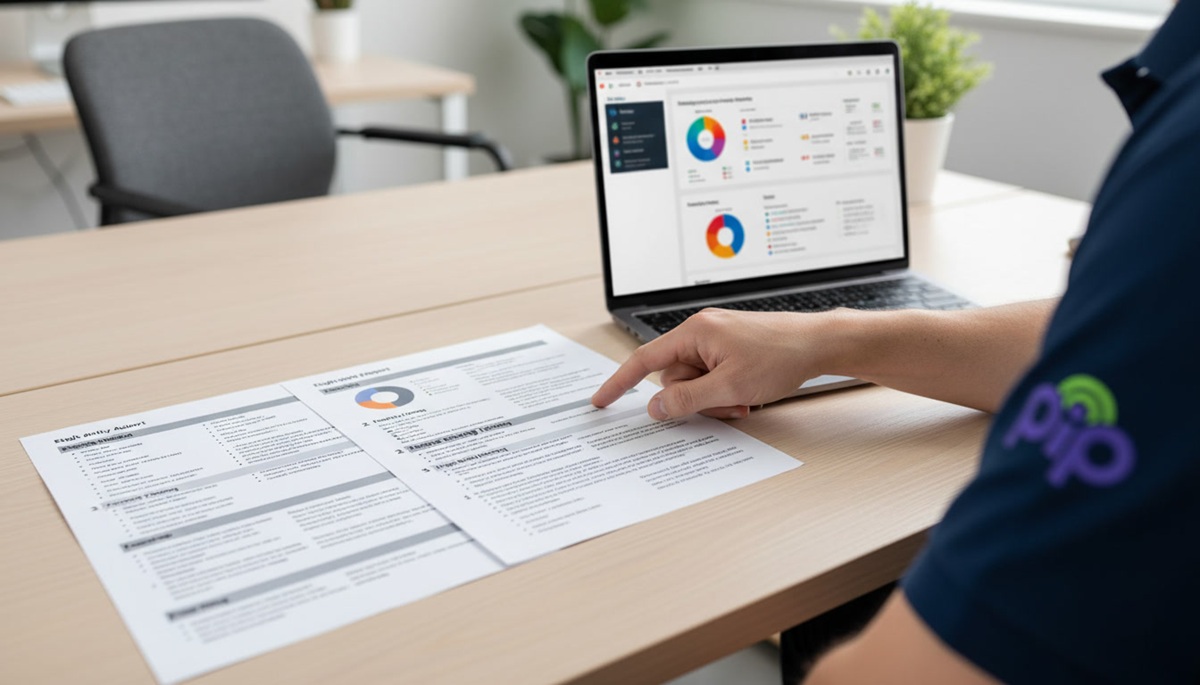
Written findings report
Full documentation of all findings, organised by risk level. Each finding includes what was observed, the security risk, and the recommended remediation action — so your organisation and internal teams can act on practical solutions rather than abstract recommendations.
Executive summary
A non-technical summary of the cybersecurity audit scope, key findings and priority actions — suitable for board presentation, cyber insurance discussion or senior leadership review. This is the document that communicates risk exposure and business impact to decision makers.
Risk matrix
All findings mapped against likelihood and impact — so the remediation roadmap prioritises the highest-risk, highest-impact items first. Risk assessments are the foundation of effective risk management — the matrix makes the priorities visible.
Remediation roadmap
A sequenced action plan: what to fix first, what can wait, and what requires a structural change versus a configuration update. The roadmap turns cyber security audit findings into a security program your organisation can execute.
Re-audit option
Following remediation, PIP can conduct a focused cybersecurity re-audit of the items addressed — confirming that previously identified vulnerabilities were effectively resolved and that the security audit recommendations to identify vulnerabilities have been actioned and that the security measures are now operating effectively.
“The most common finding in a security audit isn’t a sophisticated vulnerability — it’s a dormant admin account that was never disabled when someone left three years ago. Or a backup that’s been failing silently for six months. Or MFA that was supposed to be enabled on email but was never turned on for the one person who was exempt ‘just until they were set up’. These aren’t exotic attack vectors — they’re just gaps that nobody was looking for because nobody was looking.”
— Brad Dixon, PIPA security audit supports your compliance obligations
ISO 27001 requires organisations to conduct regular internal security audits as a condition of information security certification. The Privacy Act 1988 requires entities to take reasonable steps to protect personal information and sensitive data — a regular cyber security audit is a defensible demonstration of those steps. Organisations that handle payment card data should also be aware that PCI DSS mandates annual security assessments against industry standards. PIP’s security audit process is aligned with these requirements and produces documentation that supports compliance discussions with regulators, insurers and auditors — providing the risk assessments and evidence of proactive protection that compliance purposes demand. A regular security audit also improves incident response preparedness — the findings feed directly into the organisation’s incident response planning.
Cyber security audit — common questions
A cyber security audit is a structured, independent review of an organisation’s IT environment — examining security controls, access management, network setup, backup integrity and alignment with information security policies and compliance frameworks. The output is a findings report with a prioritised remediation roadmap. A cybersecurity audit proactively identifies vulnerabilities in your environment and documents the security risks and security measures needed to address them — before a cyber attack or data breach forces the conversation.
PIP’s cyber security audit covers access controls (who has access to what and at what privilege level), network configurations (firewall rules, segmentation, remote access), patch status (unpatched systems and overdue updates), backup integrity (are backups configured, tested and restorable?), email security (SPF, DKIM, DMARC, email gateway), endpoint security (antivirus, monitoring coverage), sensitive data handling and Essential Eight maturity. The cybersecurity audit also reviews whether security policies are reflected in actual IT configuration — because the gap between security policy and practice is where most vulnerabilities live and where cyber security risks accumulate. A cybersecurity audit uncovers these gaps systematically.
A security audit reviews what controls are in place — their configuration, coverage and effectiveness. A penetration test goes further: it simulates an active cyber attack to determine whether those controls actually hold under pressure. A cyber security audit is the logical first step — it identifies security gaps. A penetration test then validates whether those gaps can be exploited. PIP offers both internal audits and external audits, and recommends starting with a security audit before commissioning penetration testing.
For most Australian businesses, an annual cybersecurity audit is a reasonable baseline — ISO 27001 recommends this frequency, and it aligns with standard cyber insurance renewal cycles and industry standards. High-risk environments, organisations that have made significant IT changes, and businesses that hold large volumes of sensitive information should audit more frequently. PIP also recommends a security audit when changing IT providers, before commissioning new infrastructure, or following a cyber security incident.
New threats and new systems introduce new security risks that the last cybersecurity audit could not have anticipated — which is why ongoing, periodic audit reviews are part of PIP’s managed IT relationship.
Find out what’s actually in your IT environment.
PIP’s cyber security audit gives you an independent review of your access controls, network security, backup integrity and security gaps — with a prioritised roadmap for what to fix first. Identify vulnerabilities in your environment, reduce cyber risk and establish the security posture your board and insurer expect.