
Healthcare Privacy Compliance for Australian Medical Practices
- Privacy Act. APPs. NDB scheme. PIP knows the obligations.
- Healthcare compliance that speaks Australian law.
- Compliance isn’t optional. Neither is the right IT partner.
Australian medical practices have specific legal obligations under Australian law and the Notifiable Data Breaches scheme. PIP helps GP clinics, specialist practices and healthcare organisations build and maintain a healthcare compliance programme — from risk assessment to regular monitoring, with the compliance tools and support to stay compliant.
What Is Healthcare Compliance in Australia?
Healthcare compliance for Australian medical practices means meeting all applicable regulatory standards — primarily the Privacy Act 1988 and the 13 Australian Privacy Principles (APPs), the Notifiable Data Breaches (NDB) scheme, and obligations under the ASD E8 framework. Healthcare compliance is a continuous programme, not a one-time certification. Regulations change, technology evolves, and organisations grow — compliance requires continuous monitoring, regular internal audits, and compliance training for all employees involved in handling patient data.
Does Australia have HIPAA? No. It is a US law. Australia’s equivalent is the Privacy Act 1988, which includes the 13 Australian Privacy Principles governing how personal information (including patient health data) must be collected, used, stored and disclosed by healthcare organisations. The NDB scheme is Australia’s equivalent of HIPAA’s breach notification requirement — healthcare organisations must notify the Office of the Australian Information Commissioner (OAIC) and affected patients if a data breach is likely to result in serious harm.
Healthcare compliance in Australia is not optional. Non-compliance carries significant financial penalties, mandatory breach notification obligations, and reputational damage that compounds the legal exposure for healthcare organisations. Organisations in the healthcare industry have obligations across multiple areas: patient data privacy (including intellectual property in clinical records), Medicare billing accuracy, telehealth services protocols, digital health, and cyber security. Employers must ensure compliance is embedded in daily operations and maintain ethical standards — the organisations that plan ahead stay compliant with far less risk than those that react to changing regulations after the fact.
Key Regulations for Medical Practices
Australian healthcare organisations must comply with multiple compliance frameworks. These are the key regulations and professional standards that a plan must address — and the regulatory standards that PIP’s support covers.
Privacy Act 1988 / APPs
Primary federal privacy law. The 13 Australian Privacy Principles govern collection, use, storage and disclosure of personal information by healthcare organisations. All plans start here.
Notifiable Data Breaches (NDB)
Mandatory compliance: organisations must notify the OAIC and affected patients when a data breach is likely to cause serious harm. Healthcare plans must document breach response procedures.
ASD Essential Eight
The Australian Signals Directorate’s cyber framework. Increasingly referenced in compliance audits for healthcare organisations handling sensitive patient data.
Healthcare Identifiers Act 2010
Governs Individual Healthcare Identifiers (IHI) used in My Health Record and digital health systems. Plans must address how identifiers are managed and protected.
My Health Record / ADHA
Australian Digital Health Agency compliance guidelines for practices using My Health Record. Access controls, audit logging and data quality standards is required.
Aged Care Quality Standards
Aged care quality standards apply to organisations providing care to aged care recipients. Obligations include documentation, safety, and quality outcomes for patients in aged care.
NSQHS Standards
National Safety and Quality Health Service Standards — the accreditation and certification framework for Australian healthcare services. Compliance professionals in healthcare know these as the baseline for quality, safety and professional standards.
Medicare Compliance
Accurate billing and claiming under the Medicare Benefits Schedule. Medicare compliance includes anti-fraud obligations — fraud in healthcare billing is a high risk area that audits focus on.
Building a Healthcare Compliance Programme
A healthcare programme is a structured plan that helps organisations meet all applicable regulations, conduct regular audits, train employees, and manage risks before they become compliance failures. These are the core elements that compliance professionals and healthcare organisations should implement to create an effective compliance plan.
Written policies and procedures
Set standards for patient data handling, breach response procedures, access controls, billing compliance and processes. Without written standards, audits have nothing to measure against — without it, audits have nothing to measure against.
Designated compliance responsibility
A designated compliance officer, department lead or employee is accountable for compliance monitoring, coordinating audits. In a small business practice, this responsibility may sit with the practice manager.
Compliance training and education
Regular training for employees and the workforce on privacy obligations and data handling. Education supports these standards across the organisation.
Internal audits and monitoring
Conduct regular internal audits to measure compliance against regulatory guidelines. Auditors perform risk assessments to identify compliance gaps in high risk areas. Audits should be conducted throughout the year, not only when a problem arises.
Compliance tools and systems
Tools automate risk identification, logging, audit trails, and breach detection. These tools are a resource that helps organisations stay compliant with less manual effort and focus resources where they matter most.
Open reporting and communication
Employees and clinicians must be able to report compliance concerns without fear. Open communication supports a culture where risks are identified early and compliance outcomes improve.
Response to compliance failures
A documented plan for responding to breaches or compliance failures, including NDB scheme notification obligations, is part of any plan. Organisations that plan for incidents respond faster and with better outcomes for patients and the business.

Healthcare compliance — routine, manageable, supported by PIP.
What Healthcare Compliance Means for Your Business
For a medical business — whether a solo GP company, a multi-site specialist group, or an allied health services provider — healthcare compliance is not just a legal requirement. It is the framework that protects your patients, your clients, your employees and the future of the business itself. Employers and employees alike are involved in maintaining compliance: from the clinicians who handle patient data, to the professionals who manage billing, to the business owners who are responsible for meeting standards across the organisation.
Healthcare compliance failures carry consequences that go well beyond fines. Patients lose trust. Clients move to a provider they understand to be compliant. Government regulators investigate. The future viability of the business comes into question. For example, a GP practice that suffers a data breach and cannot demonstrate compliance may face government penalties, loss of patients, and reputational damage that takes years to recover from. For clients of the company, and for the professionals who refer patients there, it changes how the practice is perceived. For example, a company that has not invested in compliance training, compliance tools or risk assessment processes may not understand the risks until an audit exposes the gaps. The resources are available — but organisations must choose to use them. These are not hypothetical examples — they are the patterns that compliance professionals in the healthcare industry see across Australian organisations every year.
The good news is that healthcare compliance is achievable with the right resources, the right services, and the right plan. Healthcare providers across the industry understand that the development and implementation of a compliance programme is a business investment, not just a regulatory cost. The development and implementation of a compliance programme is an investment in the future of the business — and PIP provides the support, tools and services that healthcare providers and healthcare organisations across the industry need to stay compliant and to understand their risks. Clinicians, professionals, employers and employees all benefit when the business has a plan, the processes to maintain it, and a partner involved in keeping it current.
Most GP practices don’t know they have a problem with Privacy Act compliance until something goes wrong and someone asks to see their access logs. The common gaps we find aren’t deliberate — they’re configuration oversights: no audit logging on the clinical software server, remote accounts that haven’t been reviewed in years, backups that haven’t been tested. These aren’t hard to fix, but you have to find them first.
— PIP Medical ITHow PIP Supports Healthcare Compliance
PIP is not a law firm — but PIP manages the IT infrastructure, security controls, compliance tools and processes that requires. Healthcare organisations use PIP’s managed services to stay compliant with their obligations and to ensure across data handling, access controls, audits and breach response.
ASD E8 Alignment
PIP implements and manages E8 controls as part of managed IT services — direct support for data obligations under the APPs. Data security and cyber security addressed together.
APPs data handling
PIP configures and manages IT systems that store and transmit patient data. Access encryption, logging and procedures aligned to APP requirements help organisations comply with their privacy obligations.
Audit logging and compliance monitoring
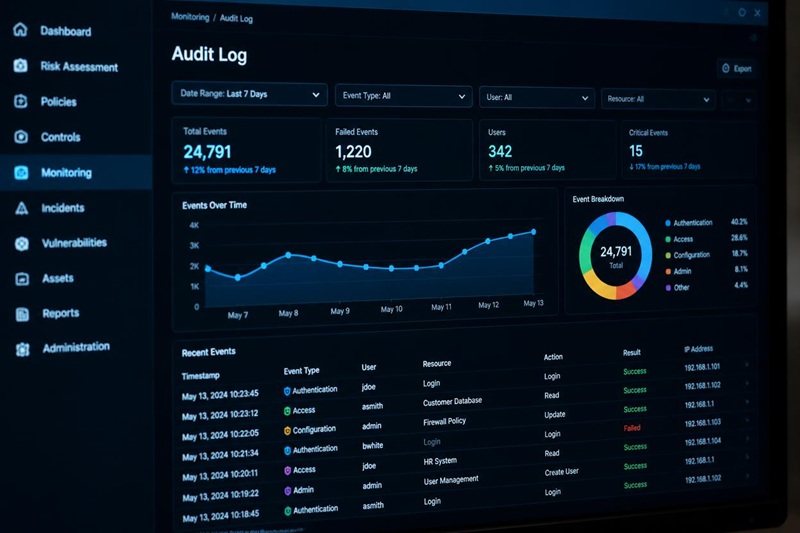
Logs, user activity and system event logs maintained for compliance auditing. Ongoing this helps organisations identify risks and conduct audits with the documentation they need.
Breach detection and response
PIP monitors for security incidents and supports NDB notification timelines. Healthcare organisations with a documented incident response plan meet their obligations faster and with better outcomes.
ISO/IEC 27001 certified datacentre
PIP’s cloud hosting runs on PIP’s own infrastructure in an ISO/IEC 27001 certified Sydney datacentre — enterprise-grade data compliance support. Organisations that host with PIP can document regulatory standards for data storage and access.
Compliance training support
Compliance training for practice employees on IT-related compliance obligations: phishing awareness, data management and handling procedures and compliance updates. Training helps the workforce understand and maintain compliance.
Regular compliance reviews
PIP conducts periodic IT compliance risk assessments against the practice’s obligations. Reviews identify risks, address gaps, and determine whether the latest updates to regulations require changes to plans or procedures.
Healthcare Compliance — Questions Answered
What does it mean to be medically compliant?
Being medically compliant means meeting all applicable regulatory obligations in the practice’s IT systems, data handling, billing and clinical operations. For Australian healthcare organisations, compliance means APPs compliance, NDB scheme readiness, cyber controls, Medicare billing accuracy, and My Health Record obligations. This is not a single event — it is a continuous programme of audits, training, compliance monitoring and compliance updates that ensure organisations stay compliant as regulations and risks evolve.
Does Australia have HIPAA?
No. HIPAA is a US law — The Australian equivalent is the Privacy Act 1988 and the 13 Australian Privacy Principles (APPs). For data breach notification, the Notifiable Data Breaches (NDB) scheme is Australia’s equivalent of HIPAA’s breach notification requirement. Healthcare organisations in Australia must comply with these Australian laws, not HIPAA. PIP helps healthcare organisations ensure the Australian regulatory framework.
What are the 7 pillars of healthcare compliance?
The seven pillars of a healthcare compliance programme, adapted for Australian organisations: (1) written compliance policies and procedures, (2) designated compliance responsibility, (3) compliance training and education for all employees, (4) internal auditing and compliance monitoring, (5) compliance tools and systems, (6) open reporting channels for compliance concerns, and (7) documented response procedures for compliance failures and breaches. Organisations that build a plan around these seven elements create a programme that can address risks, satisfy audits, and support the business through changing regulations.
What are the 5 key areas of healthcare compliance?
For Australian medical practices, the five key compliance areas are: (1) patient data privacy, (2) cyber security under the ASD E8, (3) Medicare billing and fraud compliance, (4) My Health Record and digital health obligations under the Healthcare Identifiers Act, and (5) breach notification under the NDB scheme. Healthcare compliance plans must cover all five to comply with Australian law and ensure compliance across the practice. PIP provides support, tools and training to help organisations cover each area and focus compliance resources where they are needed most.
Healthcare Privacy Compliance for Australian Medical Practices. PIP Has the Framework.
APPs, NDB scheme and ASD E8 compliance support — for Sydney GP clinics, healthcare professionals and healthcare organisations.
Healthcare support • training • audits • tools