
Artificial Intelligence, Software Engineering and Automation Built for Real‑World Business Outcomes
AI & Engineering
PIP’s AI & Engineering services focus on designing and building intelligent systems that solve practical business problems. From custom software development and systems integration through to artificial intelligence, automation and data‑driven solutions, this practice brings together engineering discipline with modern AI capabilities.
Since 2018–2020, artificial intelligence has moved from research labs into everyday products. By 2026, it touches nearly every industry – from healthcare diagnostic support that reduces diagnosis times by up to 30%, to finance systems catching fraud with 95% precision, to logistics platforms cutting fuel costs by 10–20% through to smarter routing.

How to Get Started with Microsoft Copilot
Getting started with AI doesn’t require a major project or…

Case Study: From Concept to Production in a Single Afternoon
Building AusCI’s Free Cyber Security Audit Platform with AI Client…

Your Competitors Are Using AI. Are You?
AI, it has come hard and fast into our lives,…
Our AI & Engineering Capabilities
PIP’s AI & Engineering capabilities combine software engineering discipline with practical artificial intelligence to design and build systems that deliver real, measurable business outcomes. We develop custom applications, intelligent automation and integrated platforms that improve efficiency, enhance decision‑making and unlock value from data. Every solution is engineered with performance, security and scalability in mind, ensuring it can operate reliably in production environments and evolve as business needs change.
Our capabilities span artificial intelligence and machine learning, software engineering, systems integration, automation and data platforms. Rather than deploying isolated tools, we focus on building cohesive, well‑architected solutions that integrate cleanly with existing infrastructure, applications and security controls. This engineering‑led approach ensures AI is applied deliberately and responsibly—supporting long‑term usability, maintainability and alignment with broader business and technology strategies. Explore our comprehensive selection of services that cater to a variety of needs, ensuring complete customer satisfaction.

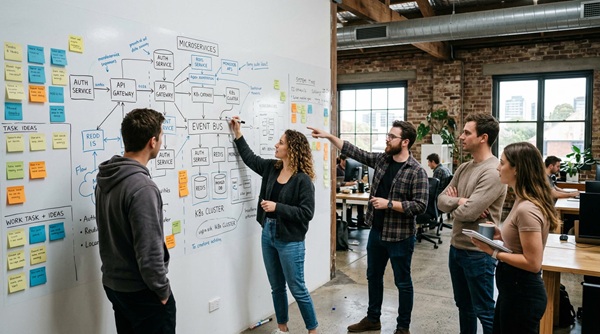
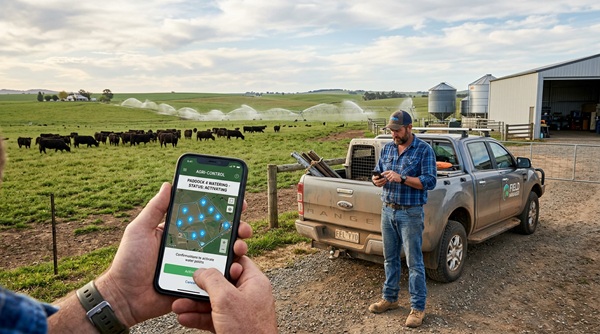

AI powered automation and workflows
Automate your Business – PIP AI Services
AI is Now in Every Business
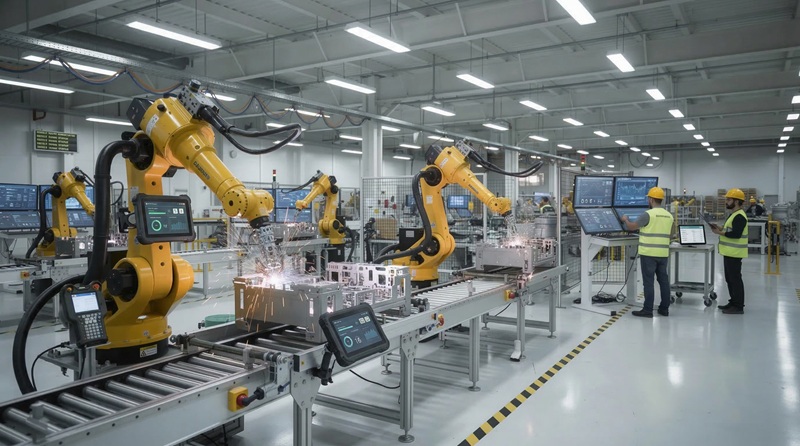
The manufacturing floor looks different today. Smart factories use ai systems for predictive maintenance, saving organizations an average of 5–10% on operational costs annually. Healthcare facilities deploy diagnostic imaging tools that rival specialist accuracy. Financial institutions process millions of transactions through ai algorithms that flag anomalies in real time.
This isn’t science fiction—it’s standard practice.
What changed? Cloud-based platforms from providers like AWS, Google Cloud, and Hugging Face democratized access to foundation models. Small engineering teams can now prototype solutions without massive in-house compute resources. The technology gap between tech giants and everyone else has narrowed considerably.
In this article, we’ll define ai, explain computer engineering in this context, and show how these disciplines combine to transform real-world projects. Future articles in this silo will explore:
- Specific industry case studies
- Technical deep dives into tools and infrastructure
- Step-by-step implementation guides for engineering teams
What Is Artificial Intelligence?
Artificial intelligence encompasses computer systems engineered to perform tasks that typically require human intelligence—perception, pattern recognition, language understanding, and decision making.
Key subfields include:
| AI Subfield | What It Does | Real World Example |
|---|---|---|
| Machine learning | Learns patterns from data without explicit programming | Regression models predicting equipment failure from sensor logs |
| Deep learning | Uses multi-layer neural networks for complex feature extraction | Convolutional networks detecting microscopic defects with 99% accuracy |
| Computer vision | Interprets visual information from cameras and sensors | Drones scanning construction sites for structural flaws |
| Natural language processing | Understands and generates human language | Chatbots resolving 70% of customer support queries autonomously |
The rise of foundation models—particularly large language models standardized around 2023–2025—allows adaptation to diverse engineering tasks. Teams can train ai models on domain-specific data for 20–50% performance gains through fine tuning.
Modern AI deployment rests on three pillars: high-quality labeled data, massive computing power via GPUs or TPUs, and rigorous engineering practices like MLOps for versioning, testing, and scaling ml models from prototypes to production systems.
What Is Computer Engineering?
Computer engineering, within ai and engineering contexts is the integration and the design of hardware, software and networked infrastructure that ai systems run on. It blends electrical engineering principles for chip design with software architecture and computer science for scalable applications.
These practical components span:
- Embedded systems on factory assembly lines processing real-time inferences
- Cloud servers in hyperscale data centres running distributed training jobs and tasks
- Edge computing units in autonomous vehicles and military weapons, executing lightweight models with sub-millisecond latency
This discipline intersects with computer science for building APIs, data engineering for constructing ETL pipelines and systems engineering for ensuring fault – tolerant infrastructure. As of 2026, industry reports indicate 74% of firms already blend traditional engineering disciplines with computing skills for AI – augmented projects, resulting in 15 – 25% faster project timelines.
All architecture supporting modern ai solutions requires teams who understand both the computational modelling requirements and the physical constraints of deployment environments.
How AI Is Transforming Engineering Workflows
AI shortens the design process by automating iterative computations and all manual validations. Teams report huge reductions in time from concept to prototype by 40 – 60% in manufacturing systems like mechanical and aerospace engineering. This innovation augments engineers, not replaces – human expertise remains essential for oversight and domain knowledge.
Generative design algorithms explore thousands of variants optimising for weight, strength and costs. With the outcome yielding parts 30–50% lighter than conventional human designs. Civil engineer teams benefit from traffic prediction models, that integrate weather and event data to simulate urban flows with 90% accuracy. Electrical engineering employs ai for grid optimisation, dynamically balancing loads and oversupply to cut energy losses by 10 – 15%.
Pattern detection in sensor streams identifies anomalies missed by human review. We see this heavily in our Australian agriculture industry. Automatic alerts prevent failures. Surrogate models approximate full physics simulations in milliseconds versus hours, enabling rapid iteration across design options.
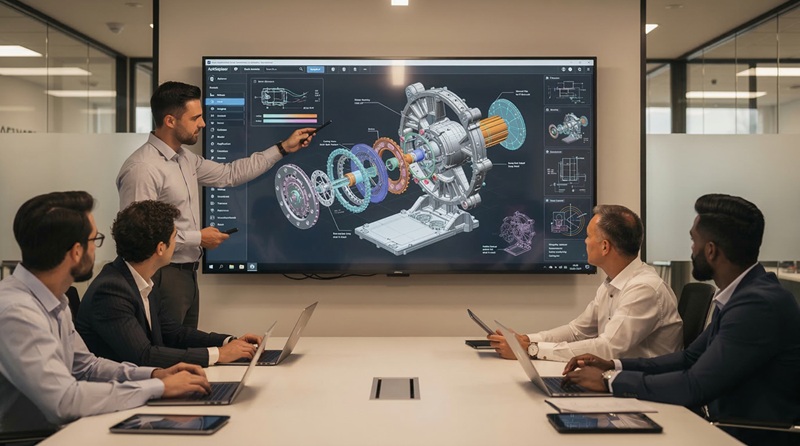
In 2026, core tools like computer aided design platforms, FEA/CFD simulators and PLM systems all have embed AI natively. Automated mesh refinement slashes pre-processing time from hours to minutes. Suggested design variants draw on all archived and historical data to accelerate development.
Human oversight remains essential for safety – critical validations, regulatory compliance and edge – case handling where AI will produce unreliable outputs.
AI in Everyday Engineering Tools
Engineering environments now include AI add-ons or built-in assistants that fundamentally change how engineers work:
- CAD platforms auto-suggest geometry modifications reducing structural weight by 20-40% while maintaining the same load-bearing capacity
- FEA/CFD tools accelerate convergence with AI-predicted initial conditions, thus cutting solve times by 50%
- EDA suites propose PCB layouts minimizing electromagnetic interference through topology optimization
These capabilities stem from models that have been pre-trained on decades of proprietary design-test cycle data from global engineering organizations. This transfer learning allows fine tuning on a specific team’s data to yield production ready features in weeks.
Engineers are increasingly interacting via natural-language prompts (“optimize this bracket for minimal material under 500N load”), semantic search boxes querying vast archives or context-aware side panels analysing active designs in real-time. Studies show a 2–3x productivity gain, though verification protocols remain necessary to mitigate risks from over-optimization or at limit markers.
AI Across Industries: From Design to Operations
AI spans the full engineering lifecycle – concept ideation, design exploration, simulation validation, manufacturing execution, operational monitoring and maintenance planning. Every manufacturing process benefits at every stage, with efficiency gains compounding through the workflow.
Between 2020 and 2025, automotive OEMs like Ford and BMW integrated generative ai for chassis parts, resulting in 35% lighter chassis’ than conventional designs. They deployed predictive analytics trained on the past 12-24 months of telematics data, updated quarterly, this resulted in slashing warranty costs by 15%.
Similar patterns like these appear across the industry landscape:
- Aerospace: Fuel efficient component designs through computational intelligence
- Energy: Wind turbine optimization boosting output by 5–10%
- Construction: Site progress forecasting via drone imagery analysis
- Consumer products: Supply chain resilience through demand sensing and analysis
Building management systems exemplify non-industrial applications, by using AI to optimize Air Conditioning (HVAC) systems, they can cut energy use by 20% through occupancy pattern recognition.
Design, Simulation and Prototyping
Generative AI design employs evolutionary algorithms and diffusion models to propose dozens of candidates satisfying multi-objective constraints:
- Strength via finite element analysis
- Weight minimization
- Material cost thresholds
- Manufacturability scores
These algorithms outperform human intuition by exploring non-intuitive topologies. GE Aviation’s fuel nozzle redesign saved 20% weight – a result human designers hadn’t anticipated.
AI-accelerated simulation uses neural surrogates trained on high-fidelity CFD/FEA runs to deliver approximations in milliseconds. Engineers can screen 1000x more iterations and converge on optima 5x faster. For fluid dynamics in automotive aerodynamics, this guides wind tunnel testing toward high promise optimized solutions.
Validation persists through traditional physics based models and physical prototypes before certification. Side by side comparisons reveal 15–30% mass reductions and 10–20% stress improvements without compromising any safety factors. These techniques provide engineers with the tools and the time, to explore the design space more thoroughly than ever before.
Operations, Monitoring and Maintenance
AI models continuously process sensor streams: vibration, temperature, pressure – from industrial assets using time series models to forecast failures 7–30 days ahead with 85–95% precision.
AI training requirements:
- Initial training: 6–24 months of historical data
- Retraining Updates: Quarterly retraining to adapt to drift and realign paramters
- Deployment: Edge devices through ingestion pipelines to AI inference engines
Predictive maintenance dashboards visualize risk heatmaps, prioritizing maintenance tasks for crews and scheduling downtime during low demand windows. This approach proves critical for high value assets like turbines (extending life 20%), production lines (reducing unplanned stops 40%) and transportation fleets.
Engineers receive explainable insights like “elevated vibration correlates 92% with bearing wear” blending automation with expert judgment. The reliable flow of information from equipment to AI to human decisions creates new opportunities for proactive maintenance strategies.
Benefits: Why AI Matters for Engineering Teams and Businesses
AI bridges engineering and business outcomes by enhancing safety margins through precise failure predictions, boosting reliability with 99.9% uptime models and elevating performance and delivery times via optimized designs.
Core benefits include:
- Cost savings: 10–20% material reduction through generative design eliminating waste
- Speed: Double digit percentage cuts in iteration time via simulation surrogates
- Quality: Fewer defects through real-time inspection systems
- Documentation: AI-powered search across decades of engineering archives
- Responsiveness: Faster adaptation to regulatory changes, governance or market demands
As of today, 85% of firms view AI as essential for competitiveness, notably, without the need to replace engineers. Reports indicate 74% expect output boosts, with 15–25% stating development acceleration is now common.
The world of engineering increasingly demands these efficiencies to enable engineers to remain competitive.
From Data to Decisions
Engineering data: CAD files, test results, logs, sensor readings—transforms into AI fuel through cleaning, labelling and augmentation into structured datasets.
Prerequisites for reliable AI recommendations:
- Data governance frameworks for versioning
- Lineage tracking for traceability
- Quality metrics ensuring 95%+ data reliability
- Synthetic data generation filling gaps for rare events
AI uncovers subtle patterns missed manually. A correlation between operating temperature and failure rate might inform better design and maintenance strategies. Well measured data yields trustworthy outputs; poor data science practices undermine even the most sophisticated model.
People and Skills: Engineers in an AI-Driven World
Modern engineers increasingly need basic AI literacy alongside domain expertise. The goal isn’t to turn every engineer into an AI researcher—it’s to enable engineers to work effectively with ai systems.
Role distinctions are emerging:
| Computer Engineer Role | Primary Focus |
|---|---|
| Design engineers | Use AI-powered tools for ideation and optimization |
| Data/ML engineers | Build and maintain machine learning models |
| Systems/computer engineers | Manage infrastructure and deployment |
Skills becoming standard between 2023–2026:
- Python scripting for automation
- Data analysis with libraries like Pandas and NumPy
- Model interpretability via SHAP/LIME techniques
- Cross-team collaboration with data science teams
Demand surges for AI fluent roles. Education adapts MIT now integrates AI projects mirroring industry practices. Engineers who develop these skills avoid employability gaps and position themselves for the ai revolution reshaping engineering practices and providing new opportunities.
Responsible and Trustworthy AI in Engineering
Engineering decisions affect safety, compliance and public trust. AI must be transparent and well governed, especially for any autonomous systems and our safety critical applications.
Core themes for responsible deployment:
- Explainability: Feature importance visualisations justifying recommendations
- Robustness: Adversarial testing boosting resilience 30% for edge cases
- Bias mitigation: Debiasing datasets to prevent skewed outcomes
As an example, the EU AI Act, finalized in the mid 2020s, mandates risk assessments, documentation and human oversight for high risk systems affecting infrastructure. Organizations must implement validation gates and continuous monitoring for drift.
Engineering teams need clear processes for ai model validation, approval and ongoing monitoring.
Where does AI & Engineering Go Next
AI is now woven into everyday engineering practice. The opportunity lies in applying it thoughtfully—identifying where in your current workflows it could remove bottlenecks in design, simulation, testing, or operations.
The AI world is now around us all. Now the race is in developing meaningful and useful – Artificial intelligence AI, to bring the next wave of automation, critical thinking and labour to the human race.